Knowledge, Surf skate knowledge, Surf skating
Surf Skating Unconvention: How Geometry, Durometer, & Asymmetry Create Speed & Control
Surf skating is a personal thing. All skateboard riding is, actually. Yet there’s a common mindset – when it comes to surf skate setups- whereby riders are almost expected to do specific things.

Table of Contents
Think For Yourself and Discover the Best Fit
Thinking for yourself, and tuning your surf skate equipment to individual wants, needs and aspirations, however, should be encouraged. Just because others do the same thing doesn’t mean you have to. There’s plenty of scope to modify and customise with surf skating. Here at Surfskateboard Shop we’d encourage this approach once you’ve mastered the basics.
The following article talks about surf skating and unconventional setups. This is based on our own personal experience of tweaking, tuning and tinkering. What follows is based on two bits of kit we regularly ride. Examples of what you can do and why. This is in no way a ‘must follow’ cookbook. Instead, we’re enticing you to open your mind and discover for yourself what’s possible and find your best fit.
The Surf Skating Fixed Formula
Surf Skating is often presented as a fixed formula: long wheelbases, soft wheels, and matching brand trucks front and rear. While this approach works for beginners, early intermediates and general surf training/cruising, it can limit speed, efficiency, and control, especially for riders who spend most of their time in bowls, skateparks, and transitions. There’s a hybrid element – combining the pump and flow of surf skating with traditional skate tricks and moves – to surf skating that more and more skaters are getting into.
COMPLETES
An unconventional surf skate approach of using short wheelbases, asymmetric setups, and split wheel durometers – showing how small geometry changes can dramatically improve performance without sacrificing surf flow – is one approach to this style of riding.
Why Short Wheelbases Aren’t a Problem
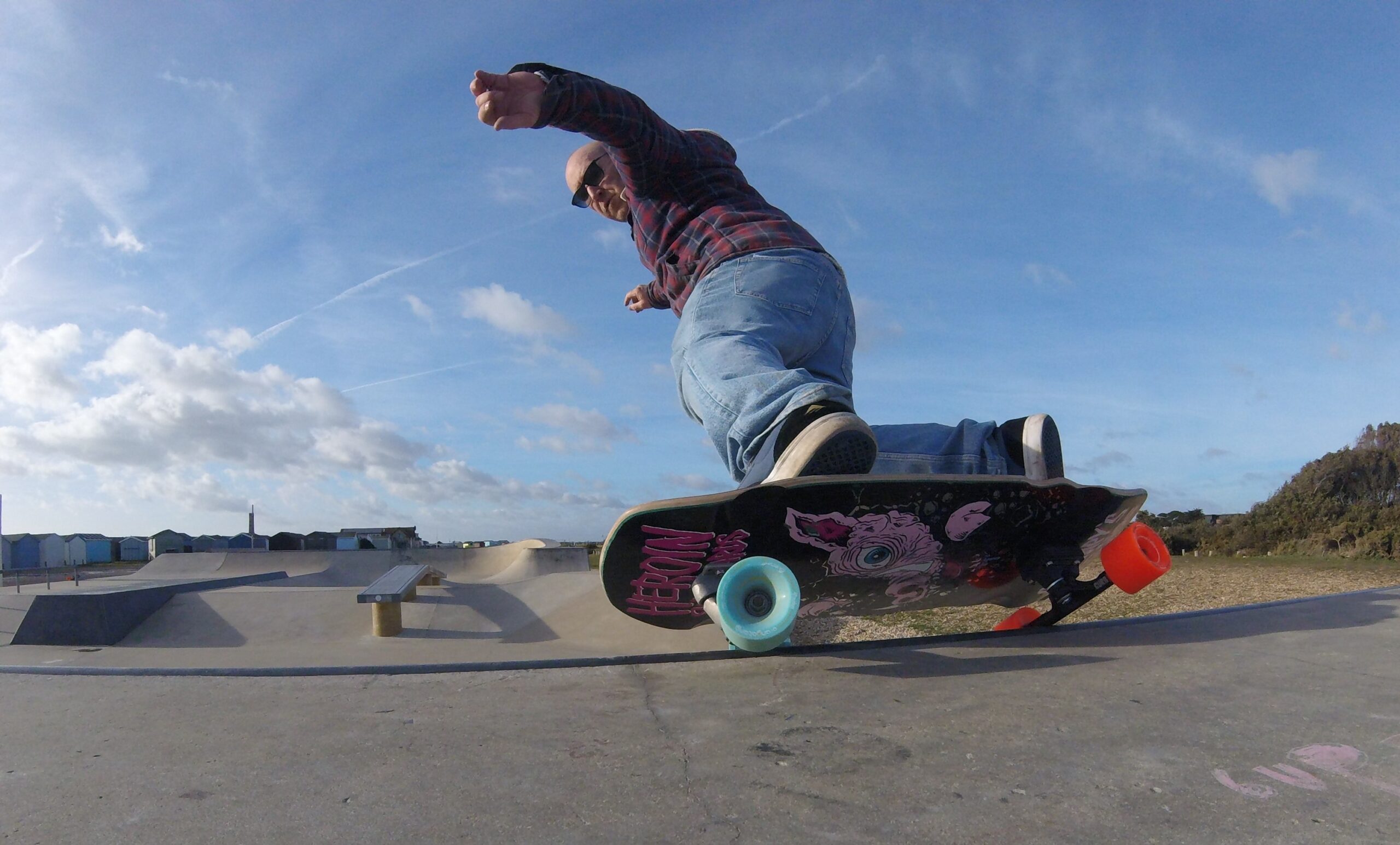
A common belief is that surf skates must use long wheelbases to feel stable. In reality, wheelbases around 15.5 inches can work exceptionally well when paired with the right components. Of course, there are always exceptions to this rule but a lot of skaters may find shorter isn’t an issue.
Shorter wheelbases offer:
- Faster turn initiation
- Quicker pumping response
- Tighter carving in bowls and transitions
Rather than feeling unstable, a well-tuned 15.5″ wheelbase becomes precise and energetic, especially for riders who value responsiveness over long-distance cruising.
Deck Width Matters More Than You Think
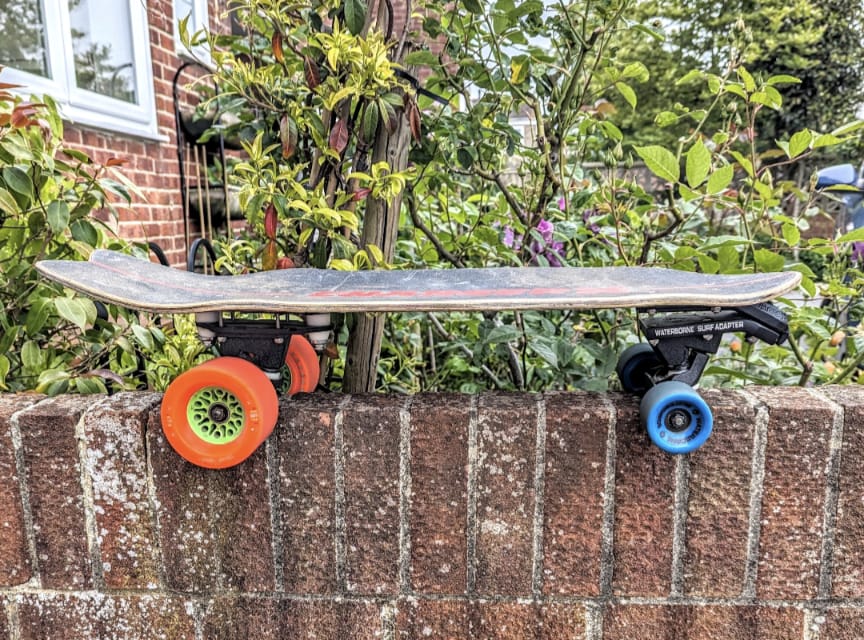
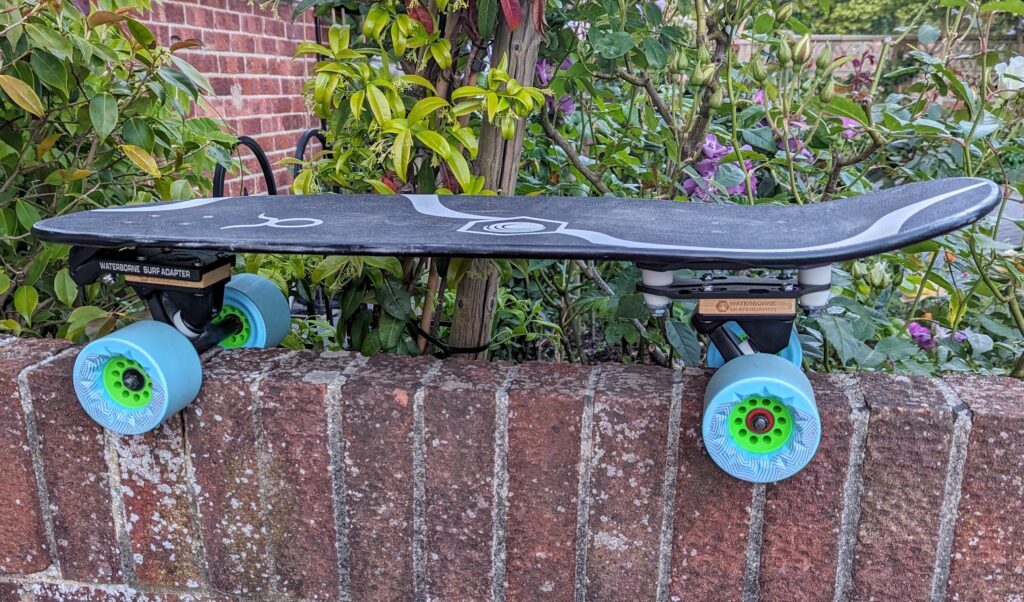
Our two decks, shown in this article, share the same wheelbase but feel completely different due to width alone. (Length is also a factor). Note: our choice of deck is based on what we feel most comfortable having tried and tested numerous types. You will (and should) have your own preferences. It should also be noted, as another unconventional point, that neither deck is billed as a surf skate deck. Yet they work a treat!
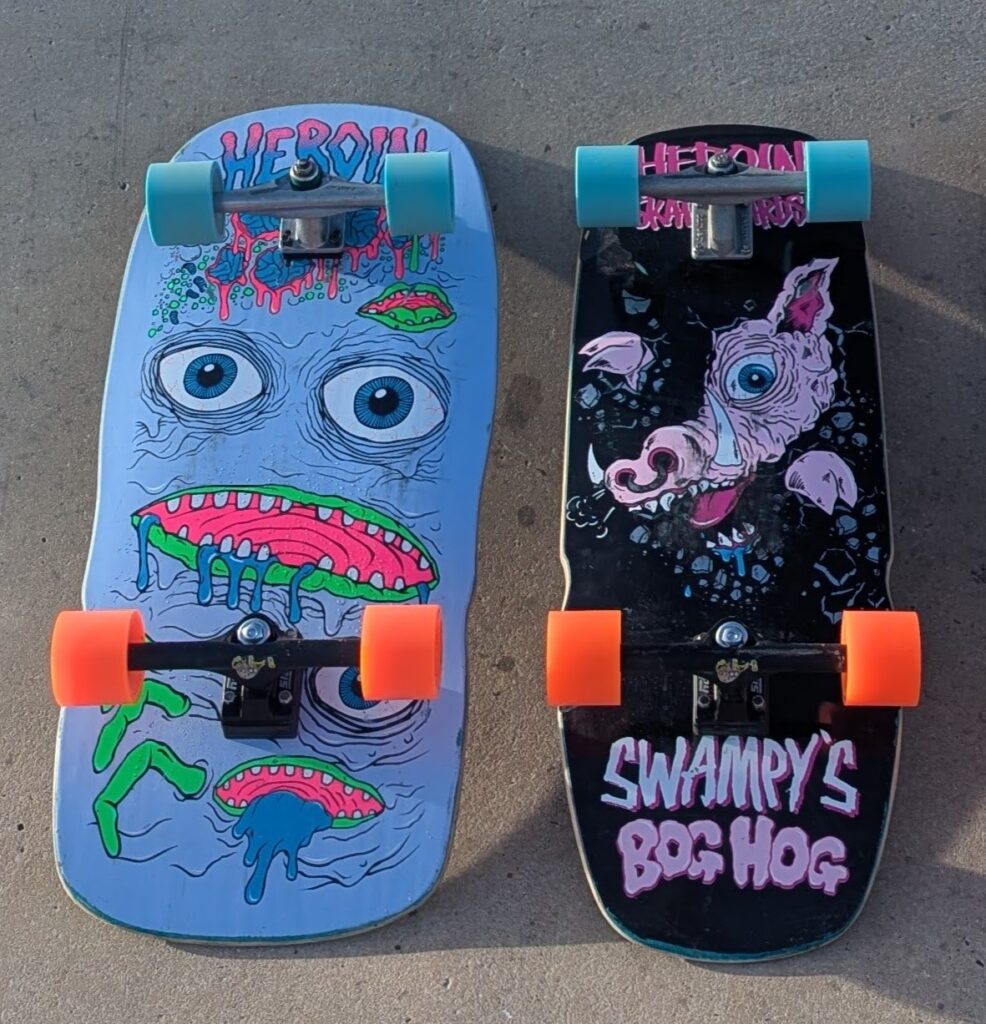
10.75” Wide Deck
- Lighter, more agile feel
- Easier to roll rail-to-rail
- Slides initiate more easily
- Excellent for playful, surfy lines
13” Wide Deck
- Extremely planted and stable
- Weight is distributed across a wider platform
- More controlled at speed
- Slides require intentional commitment
With the same trucks and wheels, the narrower deck feels lively and reactive, while the wider deck feels powerful and confident. Width is an overlooked tuning tool in surf skate that can affect the overall feel of your setup.
Asymmetric Trucks: Front Steer, Rear Drive
Using different truck characteristics front and rear is one of the most effective ways to tune a surf skate.
Surf SDkate Front Truck: High Turn, High Rebound (we’re using Carver CX)
Designed to steer aggressively
- Provides drive during pumping
- Converts rider input into forward motion
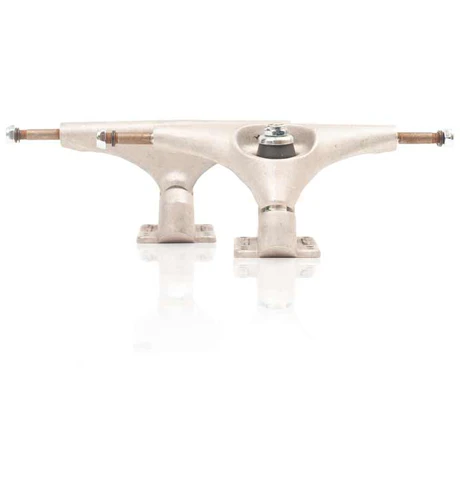
Carver CX + C2 6.5″ surf skate trucks (pair)
Carver CX + C2 6.5″ surf…
SKP Rear Truck: Stability and Control
- Limits unwanted rear steer (which can make the ride feel unstable and squirrely)
- Keeps speed through transitions and increases drive
- Acts as a pivot point for controlled slides
This asymmetric setup mimics surfboard dynamics, where the front initiates turns and the rear controls release.
Wheel Durometer Strategy: Split Front and Rear
Running the same wheel hardness on all four corners isn’t mandatory. In fact, split durometer setups can dramatically improve performance.
Front Wheels: Softer (Around 77a)
- Increased grip entering turns
- More confidence during aggressive carving
- Improved pump initiation

Orangatang 4President 70mm Skateboard Wheels
Orangatang 4President 70mm skateboard wheels are one of the smaller of Orangatang’s original two race wheels – the larger one being the In Heat.
They make great wheels for surf skating, however, particularly if you’re looking for a wheel that offers grip and flow.
Scroll down for more.
Rear Wheels: Harder (Around 80a)
- Reduced rolling resistance (heavier riders can compress their wheels, which impacts efficiency)
- Better speed retention
- Cleaner, more predictable slide release (when needed), yet doesn’t negatively impact grip
This balance works especially well for medium to heavier weight riders (like us), where overly soft wheels can absorb energy instead of returning it.
Why Bigger, Softer Wheels Can Feel Slower
It’s counterintuitive, but larger, soft wheels can feel slower—even on flat ground. (Although they do deliver a much plusher ride, which can be something you’re after).
Reasons include:
- Excessive urethane compression
- High rotational mass
- Increased rolling resistance
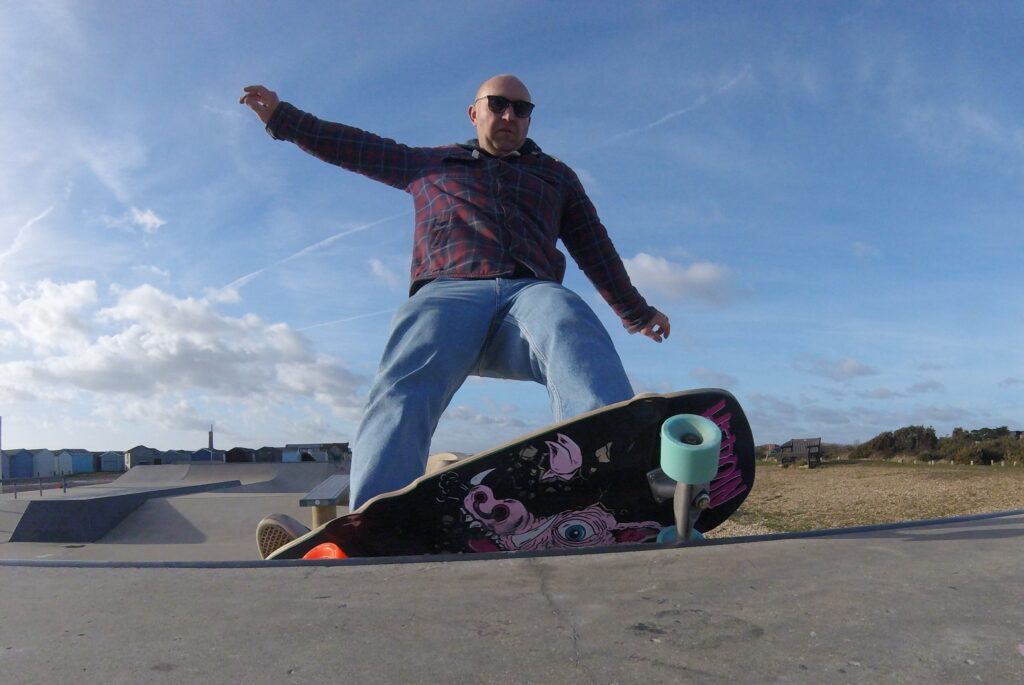
Smaller (but not tiny), higher-rebound wheels around 70–73mm often accelerate faster and feel livelier, especially when pumping rather than pushing.
Speed comes from efficiency, not just wheel size. But remember. Everything’s a balance, and as with all surf skate/skateboard component parts, there’s a huge variety of choice available. Testing, if possible, is therefore a good approach.
Bowls, Transitions, and Controlled Slides
Our chosen terrain is often a skate park. Whilst we do ride flat land as well we tend to err towards mellow transitions and bowls more often. The unconventional approach described here excels in skate parks because it offers:
- Quick acceleration out of carves
- Stable rear tracking in bowls
- Predictable grip under heavy lean
- Slides that happen intentionally, not accidentally (when we want them)
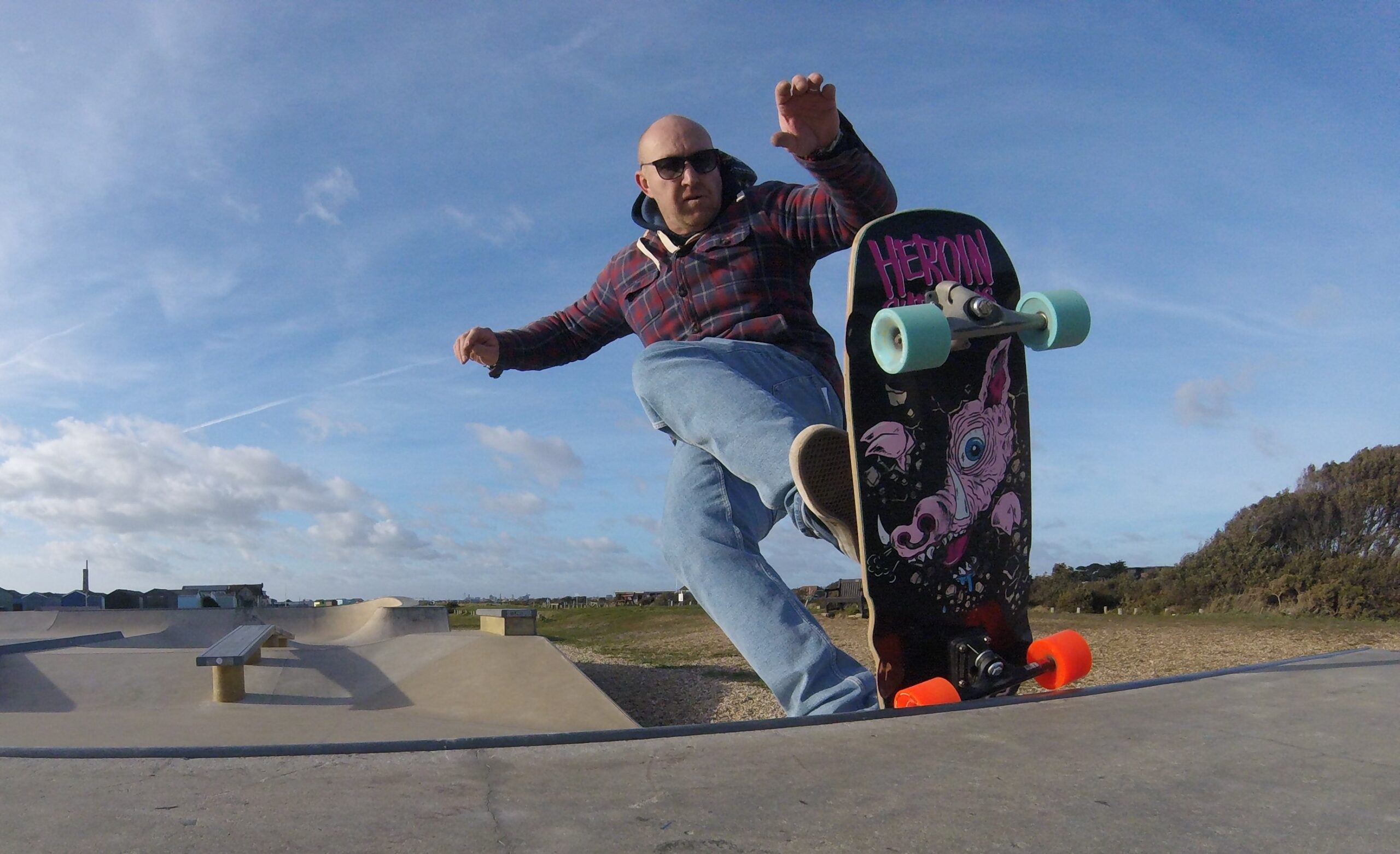
The narrower deck favours playful lines and quicker release, while the wider deck favours stability and powerful carving. Both benefit from the same tuning principles but offer different experiences depending on mood, aspiration and general conditions.
Micro-Tuning for Riders Who Hate Being Conventional
For riders who enjoy experimentation, other small changes can have big effects:
Asymmetric Wheel Sizes
- Slightly smaller front wheels
- Slightly larger rear wheels
- Smoother turn initiation and slide control
Edge Conditioning
- Lightly rounding rear wheel edges (gently by sanding)
- Easier slide entry without losing grip
Truck Angle Variation
- Slightly higher angle front
- Slightly lower angle rear
- More surf-style steering with planted drive
Micro Risers (1–2 mm)
- Adjust leverage subtly
- Fine-tune responsiveness without changing core geometry
Final Thoughts: Build for Feel, Not Tradition
There is no single “correct” surf skate setup. By focusing on:
- Short but intentional wheelbases
- Deck width as a tuning tool
- Asymmetric trucks
- Split wheel durometers
You can build a surfskate that is faster, more efficient, and more expressive than many conventional setups. All this goes completely against what you may be told. But trust us when we say: ‘try it, you might like it!’
At surfskateboard.shop, we believe the best boards aren’t built by following rules—they’re built by understanding geometry, feel, and how every component works together. As well as knowing the sport (through regular participation) inside and out.
Ride your way. Ride different. Tune differently. And above all, ride what feels right.
If you have any questions, then please feel free to get in touch – 01208 880 839